Home
Basic rules
Basic concepts
Prepare your trip
Gear
Gear Store
Survival kit
Survival knife
Shelter
Build a fire
Start a fire
Finding water
Survival food
Signaling for help
Navigation
First Aid
Predict weather
Quiz
Survival tips
Survival Books
Survival courses
Submit your story
Survival Blog
SiteSearch
Privacy Notice
Contact me
About this site

XML RSS
What is this?
Add to My Yahoo!
Add to My MSN
Add to Google
 

Finding direction from
prevailing winds

Prevailing winds leaves the biggest impression and directional effects on vegetation, snow, sand or other objects on the surface of the earth. Different areas around the world, practically without exception, has a prevailing wind from a particular direction that dominates at some seasons, and often at all seasons. As a wilderness traveler you should know how to interpret those effects on the nature to help you find direction. Nature navigation relies on your skills of observation.

prevailing winds
Trees

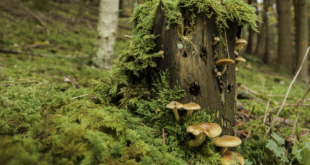
You can very often observe how trees in a given area have been influenced to lean in a particular direction. By this observation you can tell from which direction the local prevailing wind blows.

If the trees are leaning north you will probably find a southerly prevailing direction. The direction is measured in terms of where the air is coming from. A southerly direction mean it blows from south to north.

Another effect, you will often find on trees, is a greater growth of branches and leaves on the sheltered side.


Sand and snow

snow and sand dunes


The polar regions have much in common with the hot sand deserts. Cold snow behaves physically in many ways similar to sand.

In sandy deserts the ripples of sand, or in polar regions the ripples of snow, indicates the wind direction. However these ripples are very small and never more than a few inches (centimeter) high. They are not valuable as an indication of the prevailing wind direction, because they can be formed very quickly by any substantial local wind. The ripples form across the direction of the wind, just as are water waves.

In sandy deserts there are several different types of dunes. The shape of sand dunes indicates the dominant wind direction.

This also is the case for snow dunes and a considerable aid to the natural navigator who is traveling on an arctic day when the sun is clouded over.

Over extensive snow-covered areas the wind drives the drifting snow and packs it hard into ridges. The ridges are from a few inches (centimeter) to a couple of feets (about a meter) in height and aligned parallel to the prevailing wind.


Breeze

Some regions have a more fluctuating pattern of air movement then others and it's important you are aware of those conditions.


Sea breeze

Sea breeze


If you live at the coast you are familiar with the sea breeze.

At the afternoon there often is a steady wind blowing in from the water. This is because the land masses are heated by the sun more quickly than the sea in the daytime. The warm air rises, flows out to the sea, and creates a low pressure at ground level which attracts the cool air from the sea.

At night the air often reverses direction and blows from the land to the water.

Valley breeze
Valley breeze

You can see a similar phenomena in mountain regions and in valley areas.

At daytime solar radiation heats the mountain slopes and the neighbouring air. The warm air ascends towards the top following the surface of the slope, creating a upslope valley breeze.

At night the air direction is reversed, and turns into a downslope breeze.


Warm or cold air

As a compassless natural navigator you can also use certain simple and pretty obvious principles in identifying the direction.

In the northern hemisphere air from north will be generally colder than from south. The reverse applies for the southern hemisphere.


Return from "Finding direction from prevailing winds"
to "Finding direction without a compass"


Back to: Wilderness survival skills homepage


footer for prevailing winds page